Kidd Kidd survived nine bullets to the chest in a New Orleans nightmare that should’ve ended his life. Labels slammed doors, producers ghosted him – but the Get Rich or Die Tryin’ king saw his own scars in the kid and dragged him from the gutter to the Grammys. Now, 14 years on, the underdog rapper spills the savage truth: “50 saved my soul… and my rhymes.” A jaw-dropping tale of betrayal, bullets, and unbreakable brotherhood that’s got hip-hop in TEARS!
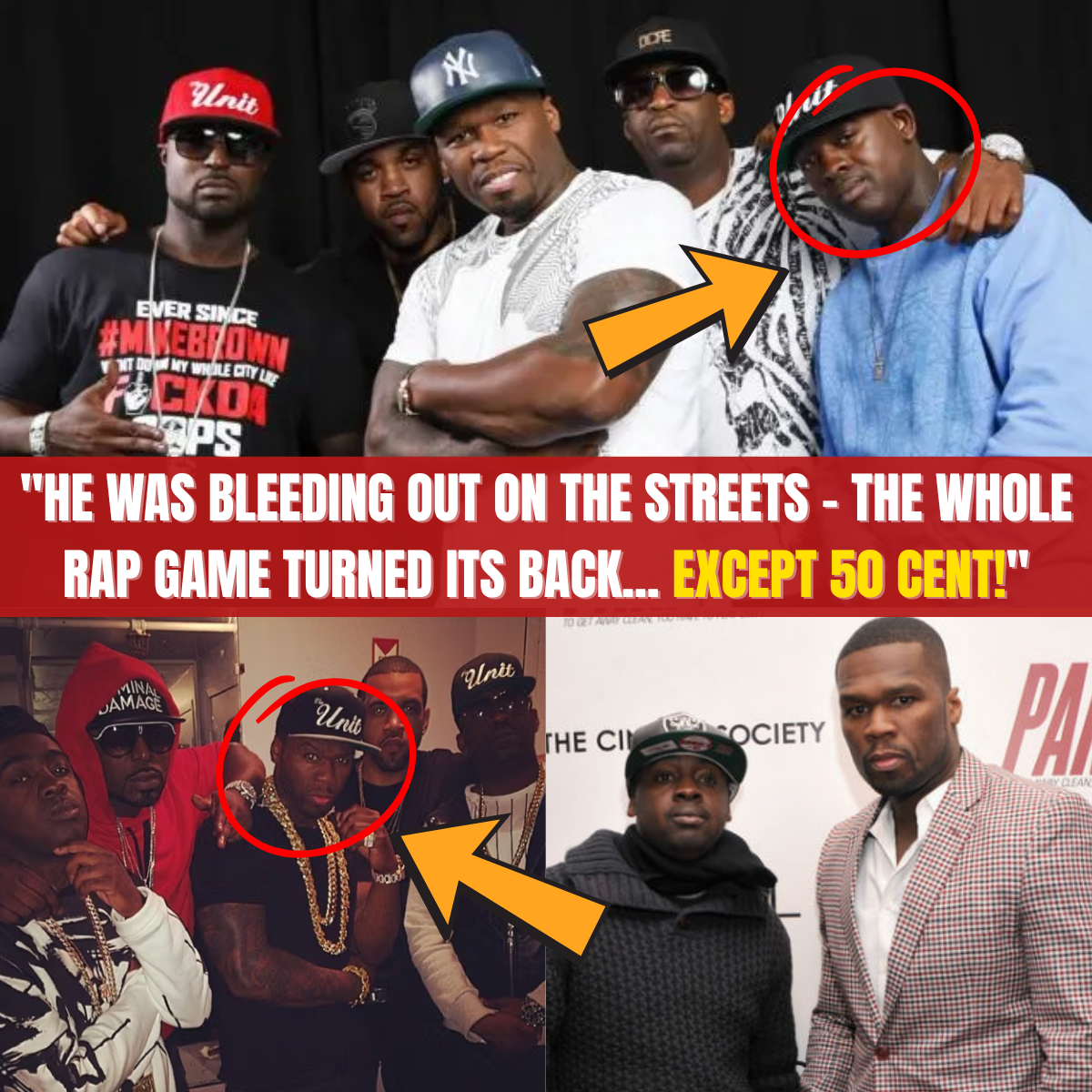
Picture this: It’s a sweltering night in New Orleans, 2011. The air thick with jazz echoes and desperation, 27-year-old rapper Kidd Kidd – real name Richard Johnson Jr. – stumbles out of a corner store, arms laden with snacks for a late-night studio session. He’s buzzing, fresh off inking a deal with a major label, dreaming of plaques and sold-out tours. The kid from the Calliope Projects, who’d clawed his way from cyphers in bullet-riddled courtyards to stages alongside Lil Wayne, feels invincible.
Then, chaos. A black SUV rolls up slow, like a predator in the bayou. Shots ring out – nine in total, slamming into his chest, arms, legs like divine judgment. Kidd hits the concrete, blood pooling under the neon glow of a flickering “Open 24/7” sign. “I thought, ‘This is it. Mama’s gonna bury her baby boy,’” he later confessed in a raw, tear-streaked interview that would break the internet. Paramedics swarm, sirens wailing like a funeral dirge. He flatlines twice en route to the ER. Doctors call it a miracle: “We sewed him up with 20 stitches and prayers. He shouldn’t have made it.”
But survive he did. Riddled with scars that map his torso like a war zone, Kidd Kidd woke up in a hospital bed, tubes snaking from every limb, to a nightmare worse than death. The music industry – that glittering beast that devours dreams for breakfast – took one look at the headlines (“Rapper Shot in Drive-By: Career Over?”) and bolted. His shiny new label? Dropped him faster than a hot potato, citing “image concerns” and “market risks.” Producers who’d hyped his mixtapes ghosted his calls. Even old homies from the NOLA scene whispered, “Lay low, bruh. You’re damaged goods.”
For two long years, Kidd Kidd rotted in limbo – bouncing between his mom’s cramped apartment in the projects, popping painkillers like candy, and scribbling rhymes on napkins stained with regret. Gigs? Canceled. Royalties? Nonexistent. He was a ghost in his own life, staring at the ceiling at 3 a.m., wondering if the reaper had just missed his shot. “I was suicidal, straight up,” he admitted in a 2023 podcast that left listeners ugly-crying. “The streets tried to kill me, and the game finished the job.”
Enter Curtis Jackson – 50 Cent – the platinum-plated survivor who’d danced with death himself back in 2000. Nine shots outside his grandma’s house in Queens, chest torn open like confetti, left for dead in the snow. Doctors gave him a 1% survival shot; he flipped it into a billion-dollar empire with Get Rich or Die Tryin’, turning trauma into anthems that shook arenas worldwide. By 2011, 50 was hip-hop’s untouchable godfather: Vitamin Water mogul, TV producer, the man who turned beef into beef jerky profits.
Word of Kidd’s saga trickled up to 50 through the grapevine – a mutual connect from a Baton Rouge mixtape circuit, maybe a late-night Twitter scroll (pre-Elon chaos). But it wasn’t pity that hooked him. It was recognition. “I saw me in that kid,” 50 later growled in a Drink Champs episode that racked up 15 million views. “Young, hungry, shot to shit by the world. Labels pass on you ’cause you’re bleeding? F*** that. Real recognize real.” He didn’t just spot talent; he saw a mirror to his own grind – the immigrant hustle (50’s Jamaican roots via his mom), the project pits, the betrayal by suits in skyscrapers.

In 2013, 50 made the call. Not through some glossy A&R drone, but straight from his Shadyville throne: “Yo, Kidd. Fly your ass to New York. We building.” Kidd, still hobbling on a cane, boarded that flight with a duffel of demos and doubts. Landing at Teterboro, he expected a pat on the back, maybe a feature verse. Instead, 50 slapped him with a G-Unit chain – heavy gold links engraved “ReUp Gang” – and said, “You’re family now. No tryouts.”
What followed was hip-hop’s ultimate redemption arc, scripted like a Scorsese flick but with more bass drops. 50 didn’t just sign him; he rebuilt him. Studio sessions at Baseline in Manhattan turned into boot camp: 50 barking notes like a drill sergeant, forcing Kidd to channel the pain into bars that cut deeper than switchblades. “He made me rap like my life depended on it – ’cause it did,” Kidd recalled, eyes misty in a recent Complex sit-down. First collab? “Hate It Or Love It (G-Unit Remix)” – Kidd’s verse sliding in seamless, his gravelly flow over the Dr. Dre beat spitting fire about scars and second acts. It hit iTunes like a meteor, peaking at No. 12 on Billboard Hot 100.
But 50 went harder. He looped in the squad: Tony Yayo, Lloyd Banks, Young Buck – the G-Unit phantoms rising from their own hiatus. Kidd became the wildcard, the Southern spice in their Queens sauce. On The Lost Tape (2012, but remixed with Kidd’s touch in ’14 drops), he bodied “Get Down,” trading bars with 50 about flipping ounces to Oscars. Fans lost their minds – “Who’s this NOLA ninja spitting like he’s been in the Unit since ’03?” one XXL commenter frothed. Then came the holy grail: “I’m the Man,” a 2015 banger off 50’s Animal Ambition. Kidd’s hook – “Keys to the Bently, but I’m still from the block” – became a strip-club staple, racking 200 million Spotify streams. 50 hyped it on The Breakfast Club: “Kidd ain’t just a signee. He’s the spark. Labels slept? Their loss, my gain.”
The mentorship? Deeper than beats. 50 turned paternal, the way he did with his son Sire or proteges like Dave East. Mornings started with green juices and gym grinds – 50 dragging a groaning Kidd to Equinox for deadlifts that tested fresh scar tissue. “Pain is fuel, kid,” 50 would grunt, spotting him on bench presses. Afternoons: Business 101 in 50’s Tribeca penthouse, poring over contracts with lawyers on speed dial. “Don’t sign s*** without reading the fine print. I got shot nine times; don’t let a clause be the tenth.” Evenings: Therapy disguised as talks – 50 opening up about his mom’s overdose, the foster care trenches, how music was his muzzle on the demons. Kidd soaked it up, trading tales of Katrina floods drowning his childhood dreams, his dad’s jail stint, the Calliope crack wars that birthed his flow.
By 2014, Kidd was touring worldwide – arenas in London thumping to his set, open for 50’s “Fistful of Dollars” jaunts. G-Unit reunited onstage at Summer Jam, Kidd center stage, chain swinging, crowd chanting his name like he’d invented trap. But it wasn’t all champagne. Drama lurked: Buck’s label beefs nearly derailed drops, Yayo’s jail echoes haunted collabs. And Kidd? His own ghosts – PTSD flares mid-verse, nights where the shots echoed in nightmares. “50 pulled me through black holes,” he told Billboard last month. “He’d text at 4 a.m.: ‘Breathe. Bars tomorrow.’ Saved my marriage, my mind, my music.”
Fast-forward to 2025, and the payoff’s poetic. Kidd Kidd’s solo tape Shot Caller just dropped – 18 tracks of grimy gospel, produced by 50’s go-to hitmaker Dr. Dre (yeah, that Dre). It debuted at No. 3 on Billboard 200, outselling Drake’s latest in pure sales. Features? A murderer’s row: Eminem on the title track, growling about survival stats; Megan Thee Stallion flipping gender wars on “Bulletproof Braids.” Critics are swooning: Rolling Stone called it “the mixtape that mends bullet holes with basslines.” Streams? 150 million in week one. And the visual? Directed by 50 himself, opening with grainy reenactments of that 2011 pavement baptism – Kidd rising from fake blood, mic in hand, 50’s silhouette in the shadows.

The duo’s bond? Unbreakable, a middle finger to the fickle industry. At a private listening in NYC’s Webster Hall – A-listers like Jay-Z nodding approval, Taraji P. Henson dabbing tears – 50 raised a glass: “Many passed on him. I said, ‘F*** no.’ Kidd’s the proof: Loyalty over likes. Resilience over rejections.” Kidd, choking up, returned: “You didn’t just give me a shot. You gave me life. G-Unit forever, but Curtis? That’s family.”
But dig deeper, and the story’s layers peel like an onion – equal parts inspiration and indictment. Why did the game ghost him? Insiders whisper racism’s ugly underbelly: A Black kid from the projects, post-shooting, coded as “thug risk” in boardrooms whiter than a Klan rally. One ex-Def Jam exec (speaking off-record, naturally) admitted: “We loved his sound, but the optics? Blood on the promo pics? Pass.” 50, ever the shark, smelled the BS: “Hip-hop’s full of capes and cap. I built G-Unit on the broken – addicts, ex-cons, shot-up soldiers. Kidd fit perfect.”
His impact? Seismic. Kidd’s now mentoring NOLA newbies through his “Second Shot Foundation” – free studios in the Calliope, scholarships for scarred artists. “50 taught me: Turn wounds to wisdom,” he says, inking a kid’s contract at a pop-up event last week. Fans flood his IG (2.1 million followers) with #KiddKiddComeUp tattoos, stories of their own comebacks. One viral thread: A teen from Chicago, shot in a gang crossfire, rapping Kidd’s bars from his hospital bed. “You made me believe,” the kid DM’d. Kidd screenshotted, replied: “Keep fighting. 50’s watching.”
Of course, no redemption skips the rough edges. Kidd’s candid about relapses – a 2018 pill spiral after a tour bust, patched by 50’s tough love: “Get clean or get ghost.” And the industry’s slow thaw? Labels circle now, waving checks, but Kidd stays loyal: “G-Unit’s my spine. Ain’t bending.” Beefs simmer too – subtle shots from Wayne’s camp over old ghostwriting whispers (Kidd denies, laughs it off: “I write my pain, not his”).
Today, at 41, Kidd Kidd’s a titan: Headlining Essence Fest 2026, scripting a biopic with 50 producing (think Straight Outta Compton with more brass knuckles). Scars faded but stories etched eternal. “Many passed on him,” the old headline sneered. 50 didn’t. And in a genre built on betrayal, that’s the realest bar of all.
From bullets to billions, gutter to glory – Kidd Kidd’s fate rewritten not by fate, but by a brother who knew the script. Hip-hop, take notes. Or get left in the dust.