A college athlete from Iowa is making headlines after filing a lawsuit against local police, claiming he was wrongfully arrested for DUI despite blowing a 0.0 on a breathalyzer test. Taven Galanakis, a 19-year-old freshman football player, alleges his civil rights were violated during the encounter.
 The incident took place on August 28, 2022, in Galanakis’s hometown of Newton, Iowa. He was pulled over by Officer Nathan Winters for using his high beams due to a broken headlight. What began as a routine traffic stop quickly escalated into an alarming confrontation.
Officer Winters immediately questioned Galanakis about alcohol consumption, setting a confrontational tone. Despite the young athlete’s calm demeanor, the officer’s aggressive questioning suggested an assumption of guilt. Galanakis maintained he had consumed no alcohol that night, citing a recent gathering with friends.
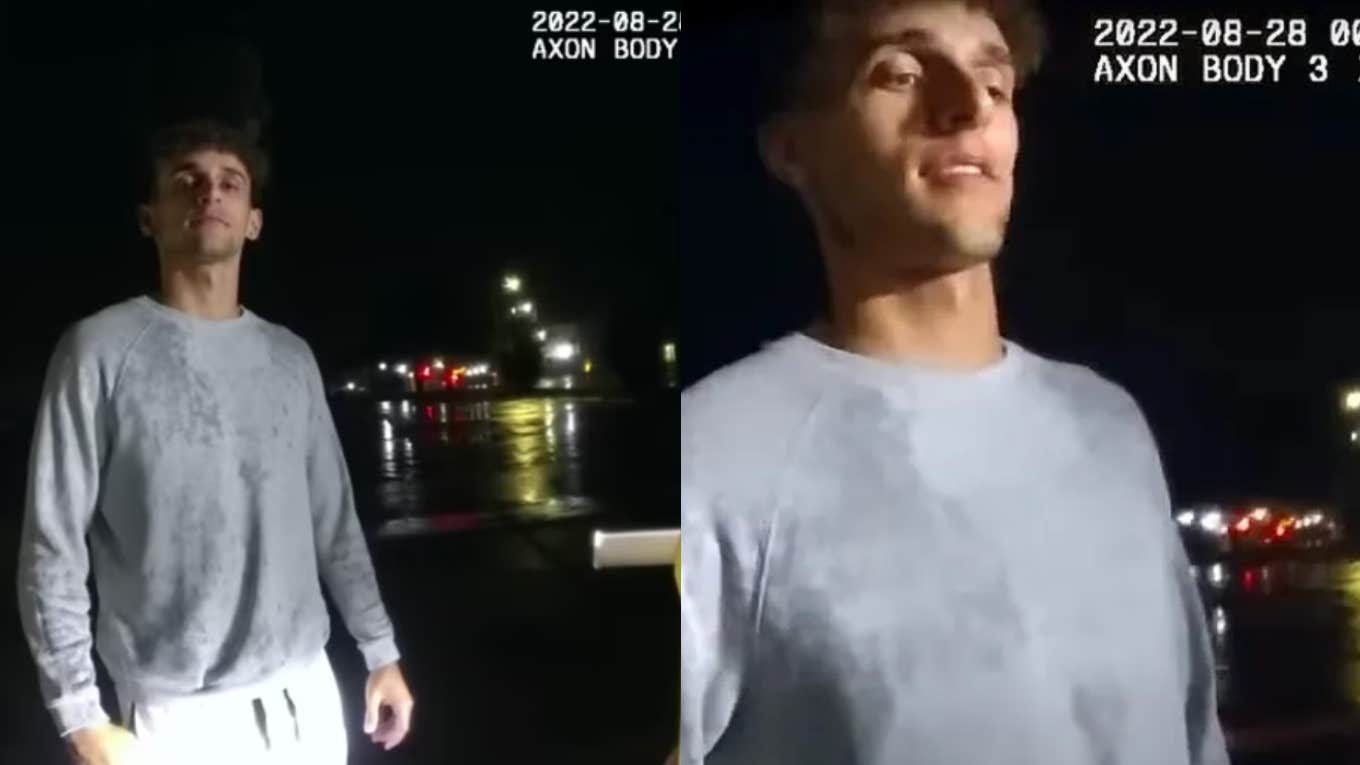
Body camera footage reveals a tense exchange, with Galanakis repeatedly requesting a breathalyzer test to prove his sobriety. “I blew zero,” he insisted, confident that the test would vindicate him. However, Officer Winters insisted on conducting a series of field sobriety tests first, which Galanakis found perplexing.
As the tests progressed, Galanakis exhibited visible signs of nervousness, compounded by the cold weather and the pressure of the situation. Winters noted Galanakis’s “watery and bloodshot” eyes, attributing them to intoxication, despite the athlete’s insistence that he was sober and on the college football team, which mandated regular 𝒹𝓇𝓊𝑔 testing.

After a series of tests, Galanakis finally took the breathalyzer, which confirmed his sobriety. Yet, despite blowing a 0.0, he was placed under arrest for operating while intoxicated. The arrest left him bewildered and frustrated, as he was handcuffed and taken to the police station.
In the days following the incident, Galanakis shared the body camera footage online, garnering significant attention and support from the community. His video has since amassed over one million views, revealing a pattern of similar experiences from other residents regarding police conduct in Newton.
Feeling empowered by the outpouring of support, Galanakis decided to take legal action against the city and its police department. He filed a lawsuit in the U.S. District Court for the Southern District of Iowa, alleging false arrest and violation of civil rights.
As he moves forward with his case, Galanakis hopes to shed light on what he describes as systemic issues within the Newton Police Department. “We need to do something better,” he stated, emphasizing the need for reform and accountability.
The Newton Police Department has yet to publicly comment on the lawsuit, and Officer Winters remains employed with the department. The case has sparked conversations about police practices and the treatment of individuals during traffic stops, particularly in small towns like Newton.
Galanakis’s story serves as a poignant reminder of the potential consequences of misjudgments in law enforcement, and the importance of standing up for one’s rights. As this case unfolds, it will undoubtedly remain in the spotlight, prompting discussions about justice and reform in policing.